


How much joint mesh do I need?
Add up every brick-to-column and beam joint you will plaster (both faces of the wall if you plaster both).
Rule of thumb: one 10 ft high column joint on one face = 10 ft of strip. A room with 4 columns plastered on one side has about 8 joints = 80 ft. A 36 in × 5 m roll cut into 6 in strips gives about 98 ft of strip.
Mesh strip needed (with 10% overlap)
0
- 4 in or 6 in × 50 ft strip0
- 36 in × 5 m roll (cut into 6 in strips)0
- Stops brick-to-column cracks
- Galvanised diamond mesh
- 4 in & 6 in strips
- 36 in rolls
- Rust-free plastic option
- Prepaid · ships across India


Drag to compare
The crack every house gets – at the column joint
Brick and concrete move differently as they dry and as the seasons change. Plain plaster can't hold the two together, so it splits in one long line down the joint. A strip of mesh nailed across the joint ties both sides together before you plaster.
Fix it before you plaster
Three minutes per joint, no special tools.

Place
Centre the mesh strip over the brick-to-concrete joint or the filled conduit chase.
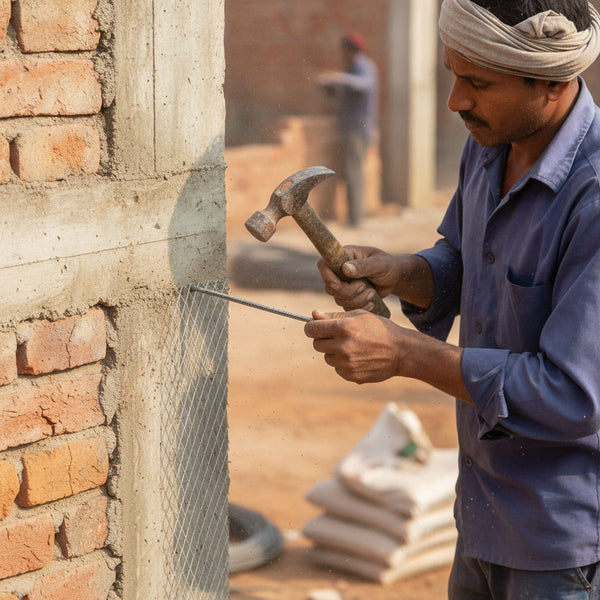
Nail
Nail it flat on both sides so it sits tight against the wall.
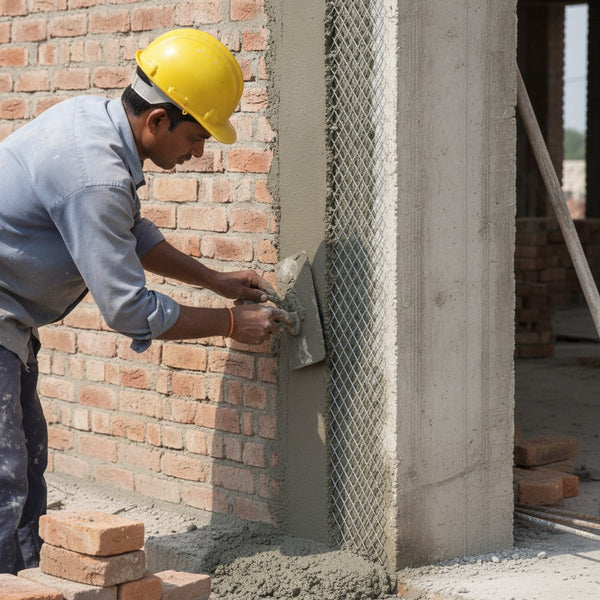
Plaster
Plaster over it as usual, pressing the mortar through the openings.
Which mesh for your job?
Pick the job – we point you to the right mesh and size.
 Brick-to-column & beam joints
Metal mesh · 6 in × 50 ft strip
The standard joint strip.
Shop this →
Conduit & pipe chases
Metal mesh · 4 in × 50 ft strip
Narrow strip for chases cut in brick.
Shop this →
 Many joints or patch repairs
Metal mesh · 36 in roll
Cut your own widths; cover larger patches.
Shop this →
 Damp walls, bathrooms, parapets
Plastic chicken mesh 80 GSM
Cannot rust or stain the plaster.
Shop this →
 Terrace & roof waterproofing coats
Fibre glass mesh
Made to sit inside waterproofing coats.
Shop this →
Metal, plastic or fibre glass?
Three meshes, three jobs.
| Feature | 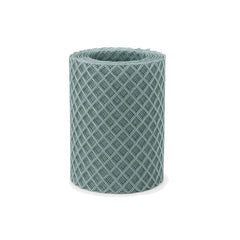 Recommended
Metal plaster mesh |
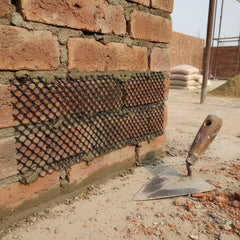 Plastic chicken mesh |
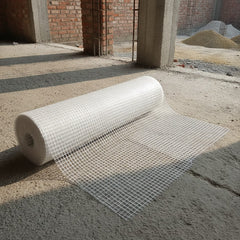 Fibre glass mesh |
|---|---|---|---|
| Brick-to-column joints | ✓ | ✓ | ✓ |
| Nailed on (stiff, stays flat) | ✓ | ✓ | ✕ |
| Cannot rust | Galvanised | ✓ | ✓ |
| Inside terrace waterproofing coats | ✕ | ✕ | ✓ |
| Ready-cut strips | 4 in & 6 in | Cut from 1 m roll | 2–12 in strips |
Plaster crack myths
What masons hear most.
MythA richer cement mix will stop the joint crack.
FactStronger plaster still can't stop brick and concrete moving apart. The mesh ties both sides together.
MythMesh is only for repairs.
FactIt works best when fixed before the first plaster – every joint, every chase.
MythAny wire jali will do.
FactLoose hexagonal wire bulges and leaves weak spots. Diamond mesh sits flat and the plaster locks into every opening.
MythPlastic mesh is weaker, so it's useless.
FactIt is lighter, but it can't rust – the better pick for damp walls, bathrooms and parapets.
Strips and rolls
6 in strips are the standard joint size.
Product details
Stop the crack where brick meets concrete
The most common plaster crack in Indian houses runs straight down the line where a brick wall meets an RCC column or beam. Brick and concrete move differently as they dry and as the seasons change, and plain plaster cannot hold the two together – so it splits along the joint, often within a year.
BuildingShop metal plaster mesh is a galvanised, diamond-pattern mesh that is nailed across the joint before plastering. The plaster locks into the open diamonds and the mesh ties both sides together, so the movement is spread out instead of opening one long crack.
How to fix it
- Place the mesh centred over the brick-to-concrete joint (or over the filled conduit chase).
- Nail it on both sides so it sits flat against the wall.
- Plaster over the mesh as usual, pressing the mortar through the openings.
Which size?
- 4 in × 50 ft strip – conduit and pipe chases, narrow joints.
- 6 in × 50 ft strip – the standard brick-to-column and beam joint strip.
- 36 in rolls (5, 10, 20 m) – cut your own strips or cover larger repair patches.
| Brand | BUILDINGSHOP |
|---|---|
| Type | Galvanised expanded metal (diamond) plaster mesh |
| Strips | 4 in × 50 ft, 6 in × 50 ft |
| Rolls | 36 in × 5 m, 10 m, 20 m |
| Fixing | Nails, then plaster over |
| Used for | Brick-to-column/beam joints, conduit and pipe chases, crack repair patches |
Is this the same as chicken mesh for plaster?
Yes – masons often call it chicken mesh or murga jali for plaster. This one is a galvanised diamond (expanded) metal mesh, which grips plaster better than loose hexagonal wire.
Where should I use it?
Over every joint where brick meets an RCC column or beam, over filled conduit and pipe chases, and under patch repairs on cracked plaster.
Which width do I need?
6 in strips are standard for brick-to-column joints. 4 in suits conduit chases. Buy a 36 in roll if you want to cut your own widths or cover larger patches.
Metal mesh or fibre glass mesh?
Metal mesh is nailed on and is best for brick-to-concrete joints and chases. Fibre glass mesh is pressed into the first coat and is better for covering large areas and roof/terrace waterproofing. Many sites use both.
How do I fix it?
Centre the mesh over the joint, nail it flat on both sides, then plaster over it, pressing the mortar through the openings.
How do I pay? Is cash on delivery available?
Prepaid only – UPI, debit/credit cards and net banking. Cash on delivery is not available.
Free delivery across India. Most orders reach you in 3–7 working days, depending on your pincode.
Payment: prepaid only – UPI, debit/credit cards and net banking. Cash on delivery is not available.
Bulk or GST invoice? Message us on WhatsApp before ordering.
Complete the job
Fibre mesh, mesh tape, PP fibre and the plaster trowel.


Customer reviews
Average of 81 buyer ratings on Amazon.in
Real buyers, real sites. Bought from us? Tell others how it worked for you.
Customers also viewed

Galvanised Metal Plaster Mesh Strips 4 & 6 inch × 50 ft – Diamond Mesh for Brick-to-Column Joints
From
Sale price
Rs. 379
Regular price
Rs. 869


